Organised cold, more moving parts
Upright freezer repairs in Gauteng
An iced-up back panel, a cracked drawer, a beep that won't quit, uprights fail in their own particular ways. We repair frost-free and manual upright freezers at homes across Gauteng, carrying the parts these machines actually wear out. We repair every major brand, including Defy, Samsung, Hisense, KIC and Bosch, with same-day call-outs across Sandton, Bryanston, Benoni and the wider Gauteng metro.
Drawer logic
Why the upright won the kitchen, and what it traded for the win
Drawers beat digging. That's the whole argument, and it's a good one: an upright freezer shows you your inventory at a glance, keeps the chops away from the ice cream, and slides into a fitted kitchen on the footprint of a door rather than sprawling like a tabletop. For the Sunday meal-preppers, the raw-pet-food households and everyone who starts stacking December's baking in November, organised cold is the only cold worth having.
The trade-off is machinery. To hand you frost-free drawers that never weld themselves shut, the modern upright runs an entire hidden ecosystem, a heater, a scheduler, sensors, a circulation fan, that no chest freezer has ever needed. More parts means more ways to misbehave. It also means more symptoms that are genuinely, affordably repairable, because nearly everything an upright does wrong traces back to a known subsystem that can be tested with instruments and fixed at your house.
One scope note before we dig in. If your frozen storage is the top or bottom half of a fridge-freezer combo, you want our top freezer or bottom freezer pages, same family, different anatomy. This page is for the standalone upright, manual or frost-free, from the slim four-drawer unit beside the fridge to the full-height cabinet in the scullery.
The machinery you never see
Frost-free, explained: the night shift behind the back panel
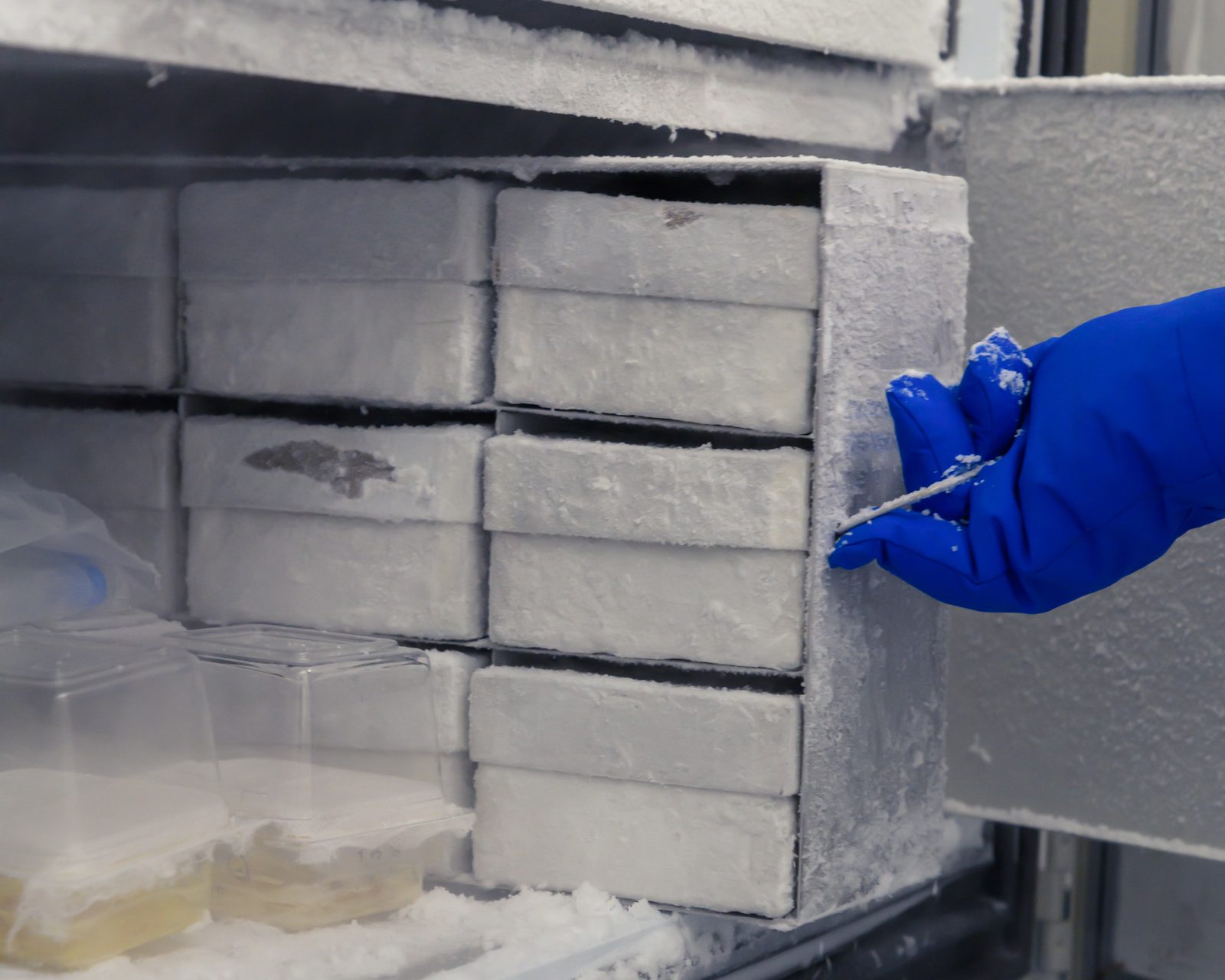
Start with where frost comes from. Every time the door opens, humid Gauteng air strolls in, and its moisture freezes onto the coldest thing it can find, the evaporator coil hidden behind the freezer's back panel. Left alone, that coil would slowly grow a fur coat of ice, the fan would have nothing to blow through, and the cabinet would warm up while the motor ran itself ragged. Frost-free is simply the machine refusing to let that happen.
A few times every day, while you're asleep or at work, the freezer runs a small, precise ritual. The scheduler, a mechanical timer on older units, a control board on newer ones, pauses the cooling and switches on a heating element beneath the coil. The ice film melts in minutes. A defrost sensor watches the coil's temperature and calls the heat off the moment the surface is clear, a thermal fuse stands guard in case anything overheats, and the meltwater slips down a drain channel to a pan beside the compressor, where waste heat evaporates it. Then cooling resumes as if nothing happened. You never see frost because the machine clears it before frost becomes visible.
- The heater element fails the way a kettle does, quietly, completely. Ice then rebuilds layer by layer, and the back panel is always where it shows first.
- The timer or control board can stop calling for defrost at all (ice), or lose its rhythm (strange cycles, faint thaw smells, food with softened edges).
- The defrost sensor can refuse to authorise heat or cut it short, so each cycle clears only part of the coil and the ice creeps outward week by week.
- The thermal fuse does its job once: it blows to prevent overheating, and from that moment the heater never runs again, a blown fuse is both a fault and a clue that something else ran hot.
The classic tell that this system has died: a back panel turning into a sheet of ice while the top drawers soften and the motor never rests, airflow strangled at the source. A hairdryer aimed at the panel buys you days of relief, not a repair. The cycle has to be made to run again, and that means finding which of the four players stopped playing.
Symptoms with signatures
What goes wrong behind the drawers
Upright faults are chattier than chest faults, they beep, scrape, pop and puddle. Each noise has a meaning, and most of them point at one of these:
- An iced rear panel, the defrost system's signature failure, covered above. If you've already melted it out once and it returned, skip straight to our freezer ice build-up guide and then call; repeat melting just postpones the same repair.
- Drawers and runners cracking, plastic at −18 °C is brittle, and a drawer carrying twelve kilograms of meat gets slammed like a filing cabinet. Corners split first, then the splits jam the runners, then the runner chews itself.
- A door that won't self-seal, usually not the hinge but the cargo: one drawer sitting proud of the front edge holds the door a few millimetres off its gasket all night. Frost moustaches around the door frame are the morning evidence.
- Alarms that won't settle, door alarms, high-temperature warnings and blinking error codes each mean something different; the FAQ below decodes them. An alarm that resumes after you've silenced it twice is a booking, not a nuisance.
- The vacuum-lock two-step, close the door and it either sighs and pops back open, or suctions shut so hard it won't reopen for a minute. Both are air-pressure physics meeting a gasket that's no longer managing the exchange.
- Scraping or chirring from behind the panel, the circulation fan clipping ice that shouldn't be there, or a fan bearing on its way out. A useful clue: the noise stops the moment you open the door, because the fan cuts.
- Evidence of a secret thaw, packets welded together, refrozen drip stains, an ice sheet under the bottom drawer. Something interrupted cooling and recovered before you noticed; worth investigating before it happens on a weekend away.
- Control board faults, dead displays, phantom alarms, defrost cycles that never trigger. Power surges after outages are the usual assassin, and boards deserve proper testing before anyone condemns them, or replaces one that wasn't guilty.
None of these improves with time. The cheap version of every repair above is the early version.
Know your machine
Manual or frost-free? Two uprights, two personalities
Not every upright carries the night-shift machinery. Manual-defrost models, plenty of older Defy and KIC cabinets among them, often build the cooling into the shelves themselves: those ridged metal shelf-plates are the evaporator, frost gathers on them as part of the design, and a few times a year you defrost by hand. Fewer parts, frugal habits, superb temperature grip on the food sitting directly on cold metal. Frost-free models hide the coil behind the panel, blow cold air around with a fan, and clean up after themselves daily. The repair conversations differ completely, frost on a manual unit is a calendar entry, frost in a frost-free one is a fault, so the first question we'll ask when you book is which personality lives in your scullery.
The sibling rivalry
Upright or chest: matching the freezer to the household
The upright's case is daily life. It stands in the kitchen rather than the garage, finds the fish fingers in four seconds, rotates stock honestly because everything is visible, and never asks you to hang headfirst over a freezer well. The price appears on two lines: more machinery to maintain, and a door that dumps its cold every time it swings, chilled air slides out of the bottom of an open upright like water from a tipped bucket, which is why long browsing sessions cost more here than they do at a chest.
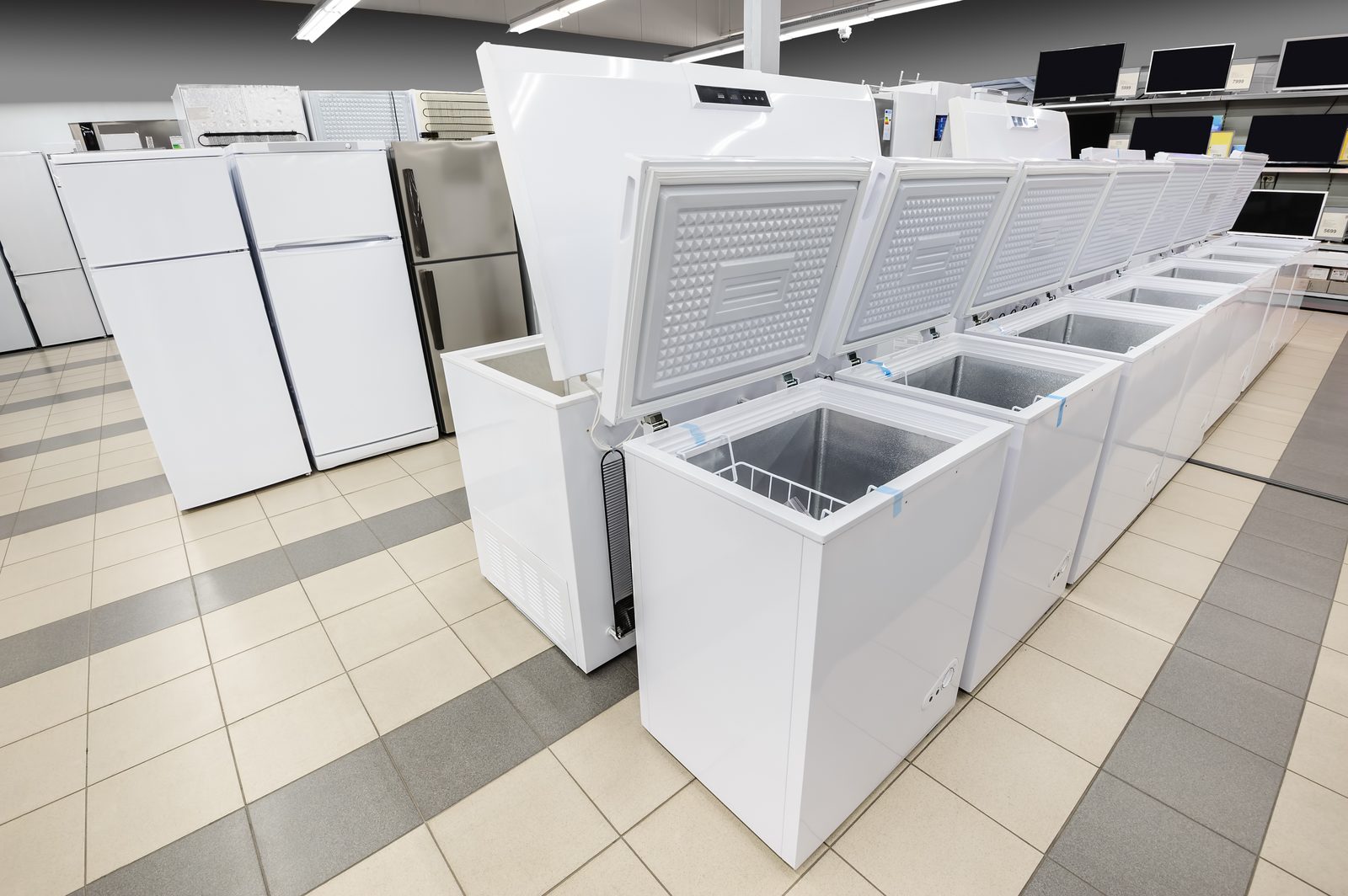
The chest fights back with patience and capacity: more litres per rand, indifference to a dusty garage, and the thermal staying power that makes it the household's load-shedding bunker, we've done that survival arithmetic in full on our chest freezer repairs page, so we won't repeat it here. Plenty of Gauteng homes sensibly run one of each: the chest holds the bulk archive, the upright serves the week. And if your "upright freezer" is actually a glass-door cabinet in a stockroom feeding a business, that's a different animal with different stakes, see our commercial freezer repairs page for that one.
When watching becomes waiting
Seven signals that say book it this week
- Ice on the back panel that returns after you've melted it out by hand.
- Food going soft in the top drawer while the bottom drawer stays rock hard, airflow or fan trouble, not your imagination.
- A motor that runs almost continuously yet delivers thinner and thinner cold.
- Beeping that resumes within the hour, every time, no matter what you check.
- Frost gathering around the door frame or hinge side, the seal is losing its argument with the kitchen air.
- An ice sheet under the bottom drawer, or a small puddle appearing on the floor, the defrost drain has blocked and meltwater is improvising.
- Any burnt-plastic smell, or a breaker that trips when the freezer starts: switch the unit off at the wall and call the emergency line rather than experimenting. We respond during and after business hours.
A freezer rarely gives you all seven. Any two together, and the odds say the fault is established and feeding, December's stock-up deserves better than a coin flip.
Booked, tested, proven
How an upright freezer repair visit runs
Tell us the story
Phone, WhatsApp or the form above. Brand, what it's doing, and any beeps or blink codes, a ten-second video of the noise saves twenty minutes of recreation later.
Get a same-day slot
Our vans work Sandton, Fourways, Bryanston, Midrand, Kempton Park and the suburbs between daily. The call-out fee is quoted upfront when you book, no surprises at the door.
Test, don't guess
Defrost faults are diagnosed component by component: heater continuity, sensor resistance, timer or board outputs, fan operation. You get a written quote before any part is fitted.
Repair from van stock
Heaters, defrost sensors, thermal fuses, fans, gaskets and relays for the common brands ride with us, which is why most uprights are fixed in the first visit.
Prove it cold
We run the unit down, confirm the drawers are holding temperature, clear the drain path, and leave you a written guarantee on the work.
Upright freezers are everyday work within our wider residential fridge repair service, and the same technicians answer the after-hours emergency line. A freezer full of softening food counts as an emergency in our book, say so when you call and we'll move you up the run.
The plastic problem
Cracked drawers, chewed runners: the hardware question
Here's an honest pattern from fifteen years of call-outs: on well-built uprights, the refrigeration outlives the plastic by a decade. Cold makes polymers brittle, loads make them heavy, and habit makes us slam them, so drawer corners split, runner clips snap, and the flap on the quick-freeze shelf goes missing in action. It feels cosmetic until it isn't: a missing or warped drawer changes how air moves through the cabinet and can hold the door off its seal, which quietly converts a plastic problem into a frost problem.
Replacement honesty, brand by brand: current Defy, Hisense, Samsung and Bosch drawer parts are generally orderable within days; Miele and AEG support their cabinets for many years, though spares travel from Europe and take patience; discontinued mid-range models are the gamble, where a sibling model's drawer sometimes fits and sometimes doesn't, we check against the model plate before promising anything. Three habits stretch the plastic's life: load heavy packs low, never pull a full drawer by one corner of its face, and don't force a runner that's gone gritty with ice. Gritty runners are telling you about a moisture problem upstream.
Nameplates we see weekly
From Defy workhorses to Miele columns: brand shapes the fault
Brand tells us where to look before we open the door. On the mid-market stalwarts, Defy, KIC and Hisense, defrost components are the bread-and-butter failure: heaters, sensors and thermal fuses, all parts we carry. Samsung and LG uprights are electronics-forward machines, so surge-bruised boards and misreporting sensors lead their list, with fan motors close behind. On the premium end, Bosch, AEG and Miele refrigeration is genuinely hard to kill, it's their drawers, hinges and trim that book the call-outs, exactly as the section above describes. Different badges, different first suspects; the diagnosis discipline is the same.
Five-minute care
Habits that keep a frost-free upright honest
Do this monthly
- Wipe the gasket with warm soapy water and do the paper test, a slip of paper should drag when you pull it past a closed seal.
- Check no drawer or packet sits proud of the front edge before bed; the door pays for it all night otherwise.
- Vacuum the dust from the grille or coils at the base or back, dust is a blanket on the radiator.
- Glance at the back panel for the first film of frost; early is the cheap time to know.
- Confirm the cabinet has a hand's width of breathing room and isn't boxed in by December's delivery crates.
Never do this
- Chip at ice with knives or screwdrivers, the coil behind the panel doesn't forgive punctures.
- Load steaming-hot pots straight in; the moisture becomes instant frost and the heat becomes an hour of extra running.
- Pack food hard against the back panel or over the air vents, the fan needs a path or the cold stops circulating.
- Ignore the same alarm twice. Once is a nudge; twice is a pattern.
- Run it pressed flush to the wall in a hot scullery corner.
If you'd rather hand the whole list to someone else, our HomeCare plan puts this freezer, and the rest of the kitchen's cold, on an annual professional once-over.
Asked at the kitchen door
Upright freezer questions, answered straight
The back panel of my upright freezer is a solid sheet of ice. What failed?
That panel hides the evaporator coil, and a sheet of ice over it means the self-defrost system has stopped doing its job. One of four parts is usually guilty: the heater element, the timer or control board that schedules it, the sensor that tells the heat when to stop, or the thermal fuse protecting the lot. Melting the ice out by hand restores cooling for a week or two, then it's back, because the cycle still isn't running. We test each component in order at your home and replace the one that actually failed, not the whole list.
My upright freezer won't stop beeping. What is it telling me?
Three messages cover most of the beeping. A door alarm means the door is open or hasn't sealed, often because a drawer or packet sits proud and holds it off the gasket. A high-temperature alarm means the cabinet has warmed beyond its safe band, which is serious unless you've just loaded a month's shopping. And a flashing code with the beep usually points to a sensor or board fault. Check the door and the contents first; if the alarm returns within the hour or food is softening, treat it as urgent and call us.
A drawer has cracked. Can I still get a replacement?
Usually, but the badge and the age decide. Drawers for current Defy, Hisense, Samsung and Bosch ranges can typically be ordered within days, and we can confirm from your model plate. Discontinued ranges are trickier, though a drawer from a sibling model in the same family sometimes fits. Miele and AEG keep spares available for many years, with import lead times. Don't run the freezer with a drawer missing for months, though: drawers are part of how an upright manages airflow and keeps its door sealing.
It's a frost-free freezer, so why am I seeing frost?
Frost-free means the machine clears its own cooling coil on a schedule; it never promised your food a frost-free life. A light dusting on packets points to humid air getting in, a gasket due for a clean or replacement, a door held ajar by overpacking, or long browsing sessions in summer. The fault version looks different: hard ice on the back panel, an ice sheet under the bottom drawer, food drying out fast. Light and occasional is housekeeping; hard and returning is a defrost-system failure worth a call-out.
My freezer thawed overnight and refroze. Is the food safe?
Treat this one carefully. Food that still held ice crystals when you found it, and stayed fridge-cold throughout, can generally be refrozen at some cost to texture. Anything that thawed fully and sat warm, especially meat, chicken, seafood and cooked dishes, isn't worth the gamble, whatever it looks like now. Packets welded together, refrozen drip stains and an ice sheet under the bottom drawer all say a real thaw happened. When in doubt, throw it out, then have the freezer checked, because they don't thaw for no reason.
Is a manual-defrost upright still worth keeping?
Often, yes. A manual upright has far fewer parts to fail, no heater, no defrost board, often no fan, and the shelves themselves frequently do the cooling, which holds food temperature beautifully. The price is defrost day a few times a year and a bit more vigilance about seals as the unit ages. If the cabinet is sound and the compressor healthy, a gasket or thermostat is money well spent. And if frost storms back within weeks of defrosting, that's a seal fault, not a design flaw, also fixable.
Related reading for frozen-food households
Chest freezer repairs
The bulk-storage sibling and its outage maths.
Freezer ice build-up
Why frost returns and what fixes it for good.
Top freezer fridges
Combo units with the freezer up top.
Bottom freezer fridges
Combo units with drawers down low.
Commercial freezer repairs
Cabinet freezers that feed a business.
Beeping, icing or thawing? Don't wait for the second alarm, book an upright freezer repair and we'll have the drawers earning their keep again.
Brands, faults & areas
Upright Freezer Repairs: the brands we repair and the Gauteng areas we cover
Fridge brands we repair
We service all the major makes sold in South Africa, from everyday models to premium, electronically controlled units: Samsung, LG, Defy, Bosch, Whirlpool, Hisense, Kelvinator, KIC, AEG, Smeg and Electrolux.
Common fridge & freezer faults we fix
Whatever the symptom, we diagnose it with proper instruments before we quote. The faults below are the ones we are called out for most.
Areas we serve across Gauteng
Same-day call-outs across Johannesburg, Pretoria and the wider metro, from Sandton and Midrand to the East Rand. Find your area below.